Advanced hip arthritis can turn ordinary movement into a sequence of painful compensations: shorter walks, slower stairs, guarded sitting, and difficulty rising from a chair. By the end, you will know which symptoms warrant a replacement discussion, how doctors confirm the source of pain, what the operation changes mechanically, and how recovery affects walking, stairs, work, and daily independence.
Key takeaways
- Ask about hip replacement when pain limits walking, sleep, or daily tasks.
- X-rays help confirm advanced arthritis and guide implant and surgical planning.
- Rehabilitation restores strength and movement, but recovery speed varies by health and muscle condition.
- Follow physiotherapy and walking guidance to protect healing and rebuild mobility.
How Arthritis Shrinks Your Walking Range and Hip Movement
Advanced hip arthritis can turn a short walk into a stop-start effort. Hip cartilage loss removes the smooth surface between the femoral head and socket, allowing painful bone-on-bone loading, inflammation, and bony spurs.
The joint then loses rotation and flexion, while hip stiffness makes each step shorter and forces the pelvis and lower back to compensate.
| Activity | What changes physically | Warning sign |
|---|---|---|
| Walking | Shorter stride, limp, slower pace, reduced distance | You need frequent rests or a walking aid |
| Stairs | Pain during push-off and difficulty lifting the leg | You rely heavily on the railing or avoid stairs |
| Sitting | Flexion becomes restricted and painful | Rising from a chair requires your arms |
| Standing | Continuous loading irritates the joint | Pain begins even while standing still |
Groin pain that persists despite activity changes, medicines, physiotherapy, or an injection is more than a minor inconvenience. Pain at night or at rest, loss of sleep, inability to work or shop normally, and dependence on another person for dressing or footwear signal substantial disability.
Losing independence matters more than a particular X-ray phrase: X-ray damage and symptoms do not always match. Discuss further assessment when walking distance keeps shrinking, hip stiffness limits daily movement, or structured non-surgical treatment no longer provides adequate relief.
When Symptoms Make Total Hip Replacement Worth Discussing
Consultation is warranted when hip pain and stiffness continue to restrict daily life despite a structured trial of non-surgical treatment. An X-ray showing severe arthritis matters, but the decision depends on how the joint affects you—not on the image alone.
These are practical total hip replacement indications:
- Pain limits walking, standing, stair climbing, work, or sleep.
- Night pain wakes you repeatedly or pain at rest makes sitting uncomfortable.
- You need a cane, avoid outings, or experience loss of independence.
- Medicines, physiotherapy, activity changes, or injections provide little relief.
- Symptoms persist for weeks or months and are getting harder to control.
Non-surgical care is worth using when it improves function without unacceptable side effects. Weight management reduces load on the hip; physiotherapy preserves strength and movement; a walking aid improves balance; activity modification avoids painful loading; medicines control symptoms; and an injection can provide temporary relief.
None rebuilds severely damaged cartilage, and delaying surgery becomes less useful when pain continues to shrink your life.
A consultation should also check whether the hip is truly the main pain source. Back disease, knee arthritis, tendon problems, or another condition can mimic hip arthritis, so surgery is not justified by a severe X-ray alone.
At Dr. Manohar Rao Ortho, this distinction can help match persistent disability with the right next step rather than treating an image in isolation.
Related service
Hip Replacement Surgery Regain Mobility. Reduce Pain. Return to an Active Life. View service → |
How Doctors Confirm End-Stage Arthritis and Choose the Right Operation
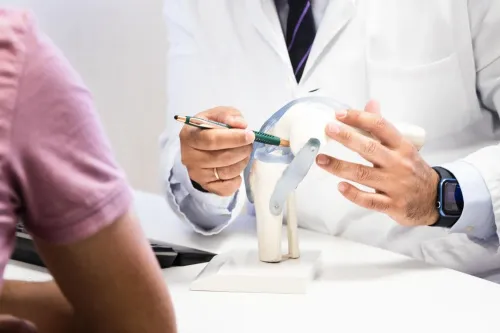
Doctors confirm end-stage arthritis by matching your disability to findings inside the hip. Your history covers groin pain, night or rest pain, walking and stair limits, difficulty putting on shoes, and whether the pain matches the affected side.
A hip examination checks limp, leg length, range of motion, strength, and pain reproduced when the joint is rotated.
A standing pelvis X-ray usually shows severe joint-space loss, bone-on-bone contact, osteophytes, sclerosis, or cysts. The image also compares both hips and helps identify fracture, deformity, or another source of symptoms.
If the findings do not explain your pain, doctors may examine your lumbar spine and knee, order blood tests for infection or inflammatory disease, or use a local-anaesthetic hip injection to test whether numbing the joint removes the pain.
| Operation | What it replaces | Typical reason |
|---|---|---|
| Total hip arthroplasty | Femoral head and damaged acetabular surface | Advanced arthritis affecting the whole joint |
| Partial hip replacement | Femoral head only; the natural socket remains | Certain hip fractures when the socket is healthy |
A partial hip replacement, also called hemiarthroplasty, is not the usual choice when arthritis has damaged the socket. Replacing only the ball against an arthritic acetabulum leaves the diseased surface in place and can preserve pain.
Total replacement addresses both sides, but doctors still weigh bone quality, age, activity, medical conditions, and the condition of the opposite hip and spine before choosing it.
What the Operation Changes Inside the Hip
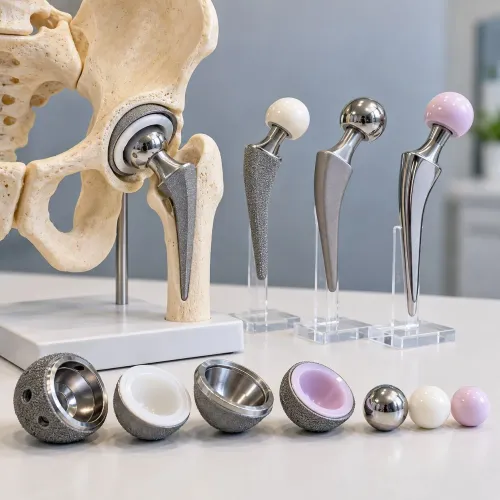
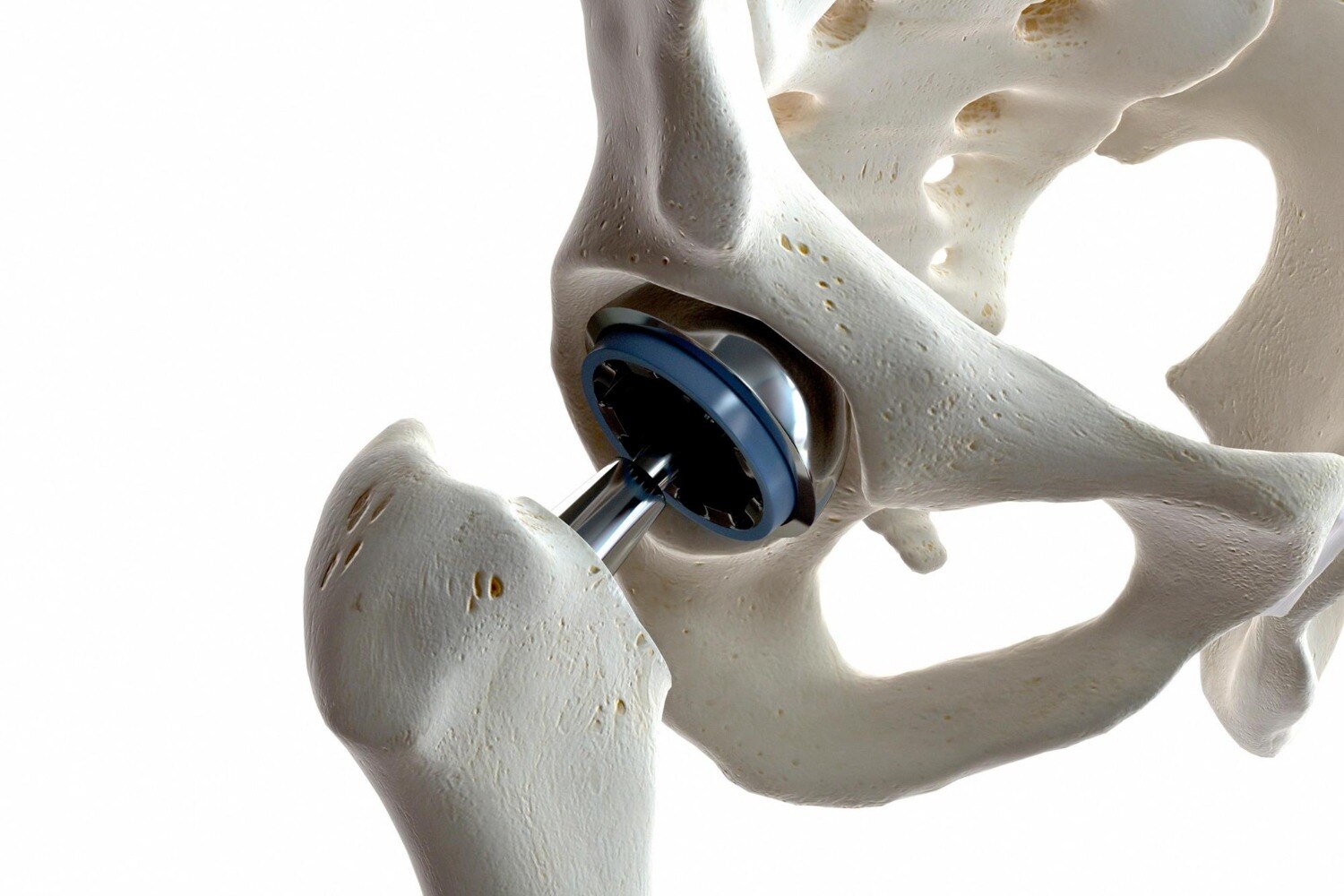
Total hip replacement removes the arthritic contact surfaces and replaces them with engineered components. During femoral head removal, the surgeon cuts the damaged ball from the top of the thigh bone. Acetabulum preparation involves removing worn cartilage and shaping the socket to receive a cup and liner.
The new ball sits inside the liner, restoring a smooth bearing surface. The femoral stem and head occupy the prepared upper femur, with the stem extending down the bone for stability. This replaces the entire hip joint, unlike hip resurfacing, which preserves more of the femoral head and suits only selected patients.
Implant selection depends partly on how the components attach and how their surfaces move against each other.
| Category | Option | How it affects selection |
|---|---|---|
| Fixation | Cemented | Bone cement holds the stem or cup immediately; useful when bone quality makes reliable bone ingrowth less likely. |
| Fixation | Cementless | A textured or porous surface allows bone to grow onto the implant; it requires adequate bone and stable initial fit. |
| Fixation | Hybrid | One component is cemented and the other is cementless, matching fixation to the bone on each side. |
| Bearing | Polyethylene with ceramic or metal | The plastic liner reduces friction; the liner’s thickness, wear resistance, and head size influence stability and longevity. |
| Bearing | Ceramic-on-ceramic | Produces very low wear but can carry risks such as squeaking or ceramic fracture. |
| Bearing | Ceramic-on-polyethylene | Combines a ceramic head with a durable plastic liner and is widely considered across different ages and activity levels. |
Your surgeon weighs bone strength, age, activity, anatomy, and dislocation risk rather than choosing a material in isolation.
How Mobility Returns After Surgery—and What Can Limit It
Same-day mobilisation is common: you may stand and walk a short distance on the day of surgery or the following day with a walker or crutches. Walking aids reduce falls while strength, balance, and confidence return; needing them does not mean the replacement has failed.
Recovery usually progresses through these milestones:
| Stage | What to expect | What can limit it |
|---|---|---|
| Early walking | Short, frequent walks with walking aids, followed by gradual distance increases | Pain, swelling, weakness, dizziness, or poor balance |
| Physiotherapy | Practice with transfers, hip movement, stair technique, and gluteal and leg strengthening | Unsafe technique, severe weakness, or inability to exercise consistently |
| Stairs | Step-by-step practice before discharge; use the rail and prescribed aid | Poor balance or limited strength |
| Driving and work | Resume driving when you can control the vehicle and perform emergency braking without significant pain or sedating medicine; desk work often returns sooner than physical work | Reduced reaction speed, pain, lifting, climbing, or prolonged standing |
| Sleep | Discomfort and difficulty finding a position often improve gradually; follow instructions about side sleeping and pillows | Night pain, swelling, or a dislocation-risk movement |
| Exercise | Walking, cycling, swimming, and selected golf are commonly suitable after clearance | Running, jumping, and collision sports place higher loads on the implant |
Supervised physiotherapy is not automatically better than a structured home programme for every uncomplicated patient. Your deficits and ability to exercise safely should determine the plan.
Longer-term mobility often improves in walking distance, stair use, and daily independence, but persistent or worsening pain needs assessment. Fever, wound drainage, calf swelling, chest pain, sudden inability to bear weight, or a new slipping sensation requires prompt medical attention.
Frequently asked questions
How does advanced hip arthritis reduce walking range and hip movement?
Cartilage loss creates painful bone-on-bone loading, inflammation, and bony spurs. Pain and stiffness then shorten your stride and restrict hip movement.
When is total hip replacement worth discussing?
Discuss it when hip pain and stiffness persist despite appropriate nonsurgical treatment and interfere with walking, sleep, work, or daily activities.
How do doctors confirm end-stage hip arthritis?
Doctors combine your symptoms and physical examination with hip X-rays. The images show joint-space loss, bone-on-bone contact, and bony changes that help guide treatment.
What changes inside the hip during total hip replacement?
The surgeon removes the damaged femoral head and replaces it with a stem and ball. A socket component replaces the worn joint surface.
How does mobility return after total hip replacement?
Walking begins with support, followed by progressive strengthening, balance work, and range-of-motion exercises. Recovery depends on healing, muscle strength, overall health, and rehabilitation.