Back stiffness that keeps returning or lasts beyond the normal recovery window deserves a closer look, especially when pain travels into the leg or affects strength and walking. You will learn how to separate a likely muscle flare from symptoms that need assessment, what an evaluation and scan can show, and how to resume work, exercise, and lifting without repeatedly triggering the problem.
Key takeaways
- Seek assessment if pain is not improving after 2 to 4 weeks.
- Leg weakness, numbness, or bladder changes need prompt medical attention.
- Start gentle movement, then increase activity as pain and function improve.
- Scans, injections, and surgery depend on the confirmed cause and severity.
When does a back strain become persistent enough to assess?
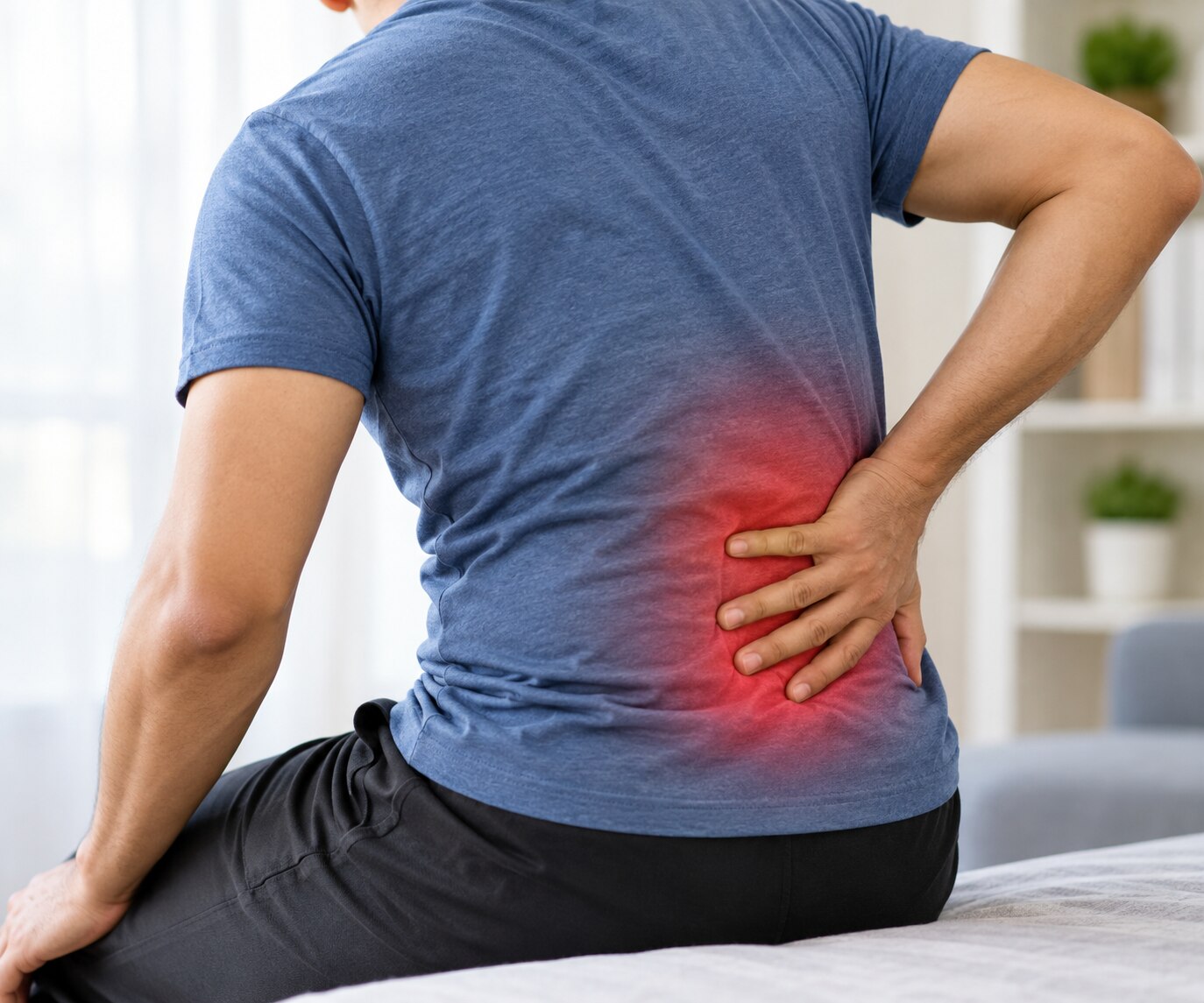
Most uncomplicated back strains start improving within a few days and settle within several weeks. Persistent back strain deserves assessment when pain or back stiffness is not clearly improving after 2 to 4 weeks, or when it continues into the subacute low-back pain 4 to 12 weeks period.
| Pattern | What it usually means | What to do |
|---|---|---|
| One short-lived episode | Pain follows a clear lift, twist, or unusual effort and steadily eases with ordinary movement | Continue gradual activity and monitor improvement |
| Persistent symptoms | Pain or stiffness remains at the same level, limits work or sleep, or returns whenever you resume normal activity | Arrange a clinical assessment rather than repeatedly treating the original strain |
| Recurring back pain | Separate episodes follow sitting, lifting, training, or work exposure, with incomplete recovery between them | Review movement demands, recovery, hip and trunk strength, and the diagnosis |
A single sore episode is different from recurring back pain because recurrence points to an unresolved load, movement, recovery, or medical factor. Repeated stiffness also does not prove a muscle injury; disc, facet-joint, hip, sacroiliac, inflammatory, or other conditions can produce similar symptoms.
Seek prompt assessment sooner if pain is severe after major trauma, comes with fever or unexplained weight loss, or causes leg weakness, numbness, or bladder or bowel changes. Reassessment identifies whether you need exercise-based care, medication advice, or further testing; persistent symptoms alone do not automatically justify a scan, injection, or surgery.
Which symptoms suggest a disc or nerve problem instead of muscle soreness?
Pain that stays in the lower back and eases as the muscle settles fits a strain more closely. Back pain radiating to the leg, especially below the knee, points more toward nerve-root irritation or a disc problem than isolated muscle soreness.
| Pattern | What it suggests | What to notice |
|---|---|---|
| Local ache or stiffness | Muscle or joint irritation | Pain remains near the back and changes with movement or touch |
| Sciatica symptoms | Nerve-root irritation | Burning or electric pain travels through the buttock and leg |
| Tingling and numbness | Nerve involvement | Altered sensation follows part of the leg or foot |
| Leg weakness from back pain | Possible significant nerve compression | Foot slaps, the knee buckles, or you cannot lift the foot or toes normally |
| Pain with coughing or straining | Disc-related irritation | Back or leg pain spikes when you cough, sneeze, or bear down |
Arrange a prompt assessment if symptoms spread, walking tolerance falls, reflexes change, or weakness is increasing. Do not assume repeated episodes are muscle soreness simply because the back feels tight.
Seek emergency care for:
- New loss of bladder or bowel control
- Numbness around the groin, inner thighs, or buttocks
- Rapidly worsening leg weakness or inability to walk
- Fever with severe back pain
- Major trauma, unexplained weight loss, or a history of cancer
These features can signal nerve damage, infection, fracture, or another serious condition requiring examination rather than routine self-care.
Why does stiffness keep returning, and what happens during an assessment?
Recurring stiffness usually reflects repeated loading or incomplete recovery, not a single damaged muscle. These are common causes of persistent back stiffness:
- Prolonged sitting or repeated work exposure
- A sudden increase in training load
- Poor lifting technique
- Restricted hip mobility
- Insufficient trunk strength
- Inadequate recovery or poor sleep position
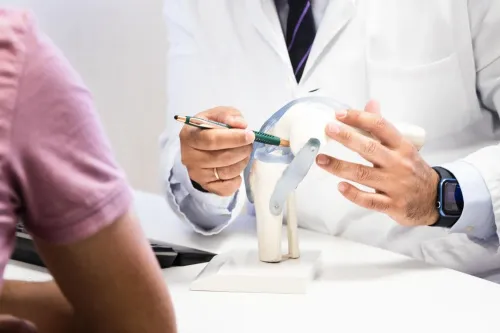
A clinician starts by asking what triggers the pain, how it changes during work and exercise, and whether rest or movement helps. They review lifting demands, sleep, medication risks and any fear of movement, poor sleep or mood symptoms that may limit recovery.
Pain below the knee, tingling, numbness, weakness, or pain brought on by coughing points away from an isolated muscle problem.
The examination compares your symptoms with movement, hip and back function, strength, sensation and reflexes. This helps identify a likely pattern, but most nonspecific low-back pain cannot be traced to one muscle from symptoms alone. The clinician also checks for sacroiliac or hip-region pain and signs suggesting disc, facet-joint, inflammatory or systemic disease.
Fever, major trauma, unexplained weight loss or a cancer history changes the assessment. The treatment plan should follow that revised diagnosis rather than the original label of “strain.”
When are scans, physiotherapy, medicines, injections, or surgery appropriate?
Conservative care is the usual next step when a presumed strain has not settled, including after 4–12 weeks of subacute pain. Pain lasting beyond 12 weeks needs reassessment, not automatic escalation to a scan or operation.
| Option | What it means | When it applies |
|---|---|---|
| Conservative care | Activity modification, back pain physiotherapy, and graded strengthening for back pain | First choice when examination finds no red flags or progressive nerve deficit |
| Medicines | An NSAID at the lowest effective dose for the shortest suitable period | Short-term relief when stomach, kidney, heart, blood-pressure, and interaction risks have been checked; acetaminophen alone is not recommended by NICE |
| X-ray | Shows bones, alignment, fracture, or major arthritis; it does not show discs or nerves well | X-ray for low-back pain only when fracture, deformity, or another bone problem is suspected |
| MRI | Shows discs, nerve roots, spinal narrowing, and other soft tissues | MRI for persistent back pain when symptoms progress, nerve signs are present, and the result will change treatment |
| Injection | Delivers medicine near an irritated nerve or joint | Selected nerve-root pain after assessment; not routine treatment for isolated muscle strain |
| Surgery | Treats a defined structural cause | Persistent disabling sciatica or progressive weakness when matching imaging and failed nonoperative care; fusion is not for nonspecific low-back pain alone |
Dr. Manohar Rao Ortho can help match examination findings to the least invasive appropriate option, avoiding incidental scan findings that trigger unnecessary procedures.
Related services
Back Pain Management Our Back Pain Management program is designed to diagnose, treat, and relieve acute and chronic back pain with a comprehensive, patient-focused... View service → |
Back Pain Treatment Comprehensive Back Pain & Spine Care Back pain shouldn’t dictate how you live, work, or move. View service → |
What should you do in the first few days and when returning to activity?
Pause heavy lifting, running, jumping, contact sport, and repeated bending or twisting during the first few days of back strain. Bed rest and back pain do not pair well: prolonged bed rest reduces conditioning and can make ordinary movement harder.
Stay mobile without chasing pain. Use this simple plan:
- Walk for five to ten minutes several times daily, stopping before symptoms build.
- Change position every 30 to 45 minutes instead of sitting or lying down for hours.
- Try gentle pelvic tilts, easy trunk movements, or relaxed hip motion if they do not increase pain.
- Reduce the distance, speed, load, or repetitions when symptoms flare; pain that remains worse the next morning means you did too much.
Use these thresholds to plan your return to work, lifting, and exercise:
| Activity | Pause or modify | Resume when |
|---|---|---|
| Work | Repeated lifting, prolonged sitting, or twisting | You can change positions and complete essential tasks without escalating pain |
| Lifting | Heavy, awkward, overhead, or floor-level loads | Walking is comfortable, a bodyweight squat and hip hinge are controlled, and a light load causes no next-day flare |
| Exercise | Running, jumping, loaded bending, or intense core work | Daily movement is comfortable and symptoms stay at baseline for 24 hours |
| Sport | Sprinting, cutting, contact, or full training | You have near-normal movement, adequate strength, and sport drills cause no pain or neurological symptoms |
For a safe return to lifting after back pain or return to sport after back strain, increase one variable at a time. Stop and seek assessment for leg weakness, spreading numbness, or bladder or bowel changes.
Frequently asked questions
When does a back strain become persistent enough to assess?
Arrange an assessment when pain or stiffness is not clearly improving after 2 to 4 weeks, or continues through the 4- to 12-week subacute period.
Which symptoms suggest a disc or nerve problem instead of muscle soreness?
Pain travelling into the leg, tingling, numbness, weakness, or changes in bladder or bowel control suggest nerve involvement rather than simple muscle soreness.
Why does stiffness keep returning, and what happens during an assessment?
Recurring stiffness can relate to restricted movement, poor load tolerance, weakness, posture, or an untreated disc or joint problem. An assessment reviews your history, tests movement and strength, and checks reflexes and sensation.
When are scans, physiotherapy, medicines, injections, or surgery appropriate?
Physiotherapy and appropriate medicines often support recovery. Scans are used when findings suggest a specific structural or nerve problem, while injections or surgery are reserved for selected cases after clinical assessment.
What should you do in the first few days and when returning to activity?
Keep moving with short walks, avoid prolonged bed rest and painful heavy lifting, use a comfortable heat or cold method, and return to activity gradually as movement and symptoms improve.